
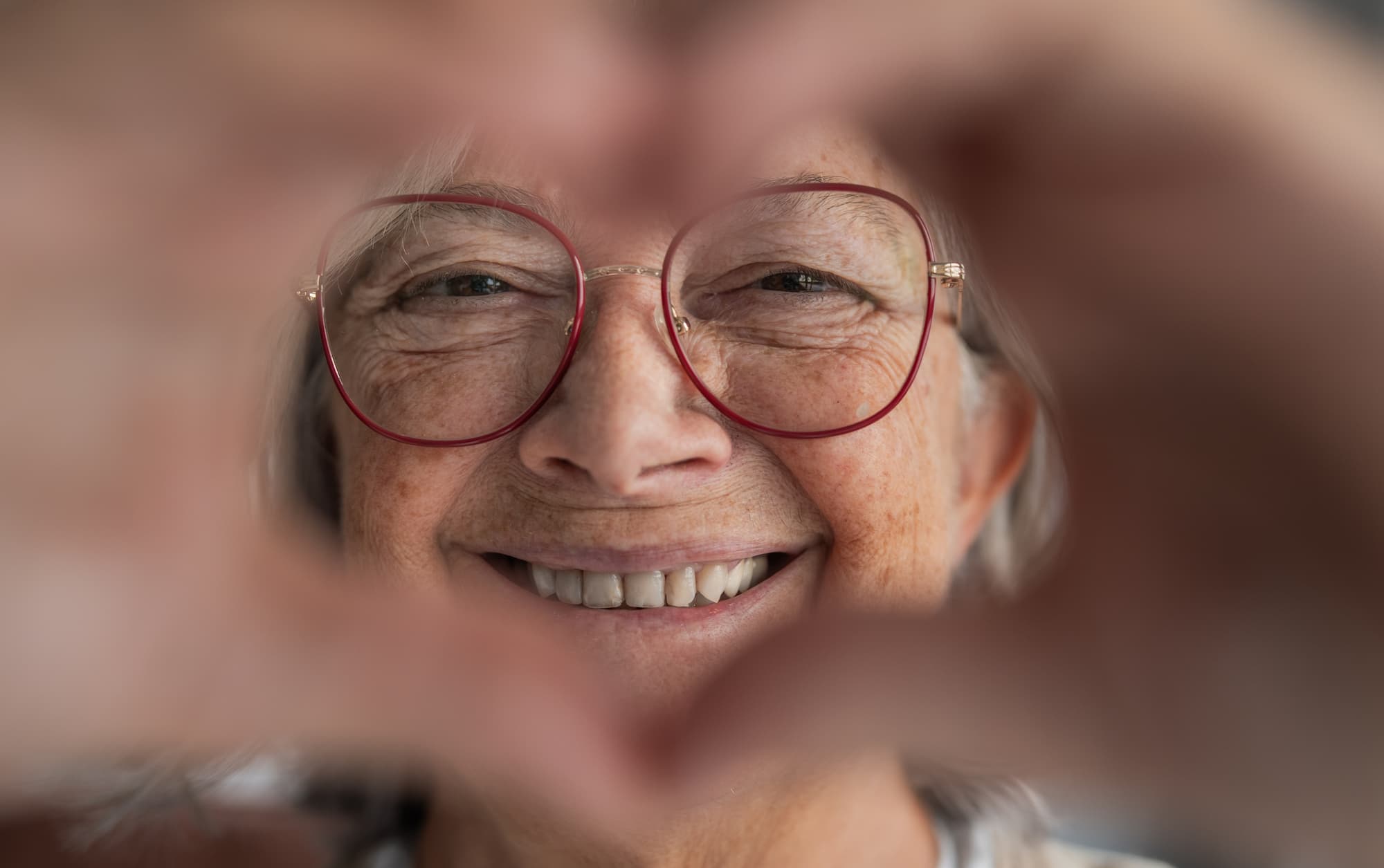
Every night, resident Jayne Epperson writes a list of what she wants to do the next day. So when she wakes up, the day already has direction and won’t turn into what she calls a “dead day.” It’s a simple, positive, healthy habit that science backs up: How you think about tomorrow shapes how well and how long you live.
The Research-Backed Case for Positive Thinking
Researchers have spent decades studying happiness, and one finding keeps surfacing: positive thinking works less like a fixed personality trait and more like a skill you can build. And it’s one with real payoffs for health and longevity.
A Harvard T.H. Chan School of Public Health study followed nearly 160,000 women for up to 26 years. Researchers found the most optimistic quarter of participants lived about 5.4% longer than the least optimistic quarter, with a 10% greater chance of living past 90.
The effect held across race and ethnicity, but diet and exercise only explained part of it. Optimism itself seems to be doing real work in the body, not just steering people toward healthier habits.
This doesn’t mean you should ignore life’s harder moments. Positive thinking, as Mayo Clinic staff describe it, is less about pretending everything is fine and more about facing the same difficulties with a steadier, more constructive lens.
10 Benefits of Positive Thinking
Mayo Clinic research points to 10 benefits of positive thinking. The effects are far-reaching, touching everything from your immune system to your relationships. Here’s what an optimistic outlook has been shown to contribute to:
- A longer lifespan, one of the most well-documented effects of optimism.
- Lower rates of depression.
- Reduced stress and distress.
- Greater resistance to the common cold and other illnesses.
- Better psychological well-being.
- Better physical well-being.
- Decreased risk of heart attack and cardiovascular problems.
- Stronger coping skills during hard times.
- Lower perceived stress, even after a short gratitude practice.
- Greater life satisfaction and stronger social connections.
How to Develop a Positive Mindset
If you’re wondering how to develop a positive mindset, start with gratitude. A study on gratitude interventions among older adults tested a two-week practice: jotting down three good things each day. Well-being improved and stress dropped, with the effect still holding a month later. It turns out, contentment works a lot like a muscle: the more you use it, the stronger it gets.
How to Think Positive, One Habit at a Time
Learning how to think positively usually starts small: noticing the good in a day, practicing gratitude and purposely choosing to see possibility instead of obstacle. Jayne, who moved to The Carrington in January 2021 to be closer to her grandchildren and daughter, embodies exactly that.
“I was always with my friends and doing something all the time,” she says. “But during the pandemic, I learned that it’s OK to be by myself. I learned to like myself and that it’s OK not to have to be active every day.”
That shift, from isolation feeling like a loss to solitude feeling workable, mirrors something researchers call cognitive reappraisal. It’s one of the most effective tools for how to be more positive when things get hard.
Jayne’s nightly list works the same way. Instead of waking up unsure what the day holds, she gives it direction before it even starts. Deliberate structure is one of the more reliable ways to develop a positive mindset in practice. It’s not through forced cheerfulness, but through small acts that hand you back a sense of control.
When Wellness Runs in the Family
Between swimming laps, painting, taking aquatics classes twice a week and keeping the fourth-floor library running, Jayne stays busy on her own terms. Though she’s also learned it’s perfectly fine to slow down some days.
She’s also quick to help new residents feel at home when they first move in, and she checks in on neighbors who are having a rough day. She’ll often nudge them toward an activity or a new interest instead of staying in their independent living residence.
Connection, it turns out, is inseparable from contentment. Research consistently links strong social ties to lower rates of depression and greater life satisfaction in older adults, the same benefits gratitude and optimism keep turning up.
For Jayne, that connection runs even closer to home. Her daughter is Director of Life Enrichment at The Carrington, her granddaughter works alongside her mom and her grandson teaches swimming at the community two days a week. “I see them all the time. I couldn’t imagine that it would be so nice,” Jayne says, grateful for a closeness with family that not every resident gets to experience.
Positive Thinking, Put Into Practice
At The Carrington, wellness isn’t treated as one program on a calendar. It shows up in the pool where Jayne swims, in the library she keeps stocked, in dining room conversations and in the everyday choice to build a life around what brings contentment rather than what causes stress. Happiness works less like an attitude you’re born with and more like a daily practice—one of the best investments you can make for a long, well-lived life.
Our purpose-built, senior living community supports that with a full calendar of activities and events, and a friendly team that handles the maintenance so you can focus on doing what you love. And you’ll share this wellness-focused lifestyle with a close-knit community of neighbors working toward the same goal: a good day, every day.
Positive thinking might start as a mindset, but at The Carrington, you can watch it turn into daily practice. The best way to understand what that looks like is to see it for yourself. Contact us to learn more about life at The Carrington.
Featured Image: PerfectWave / Shutterstock